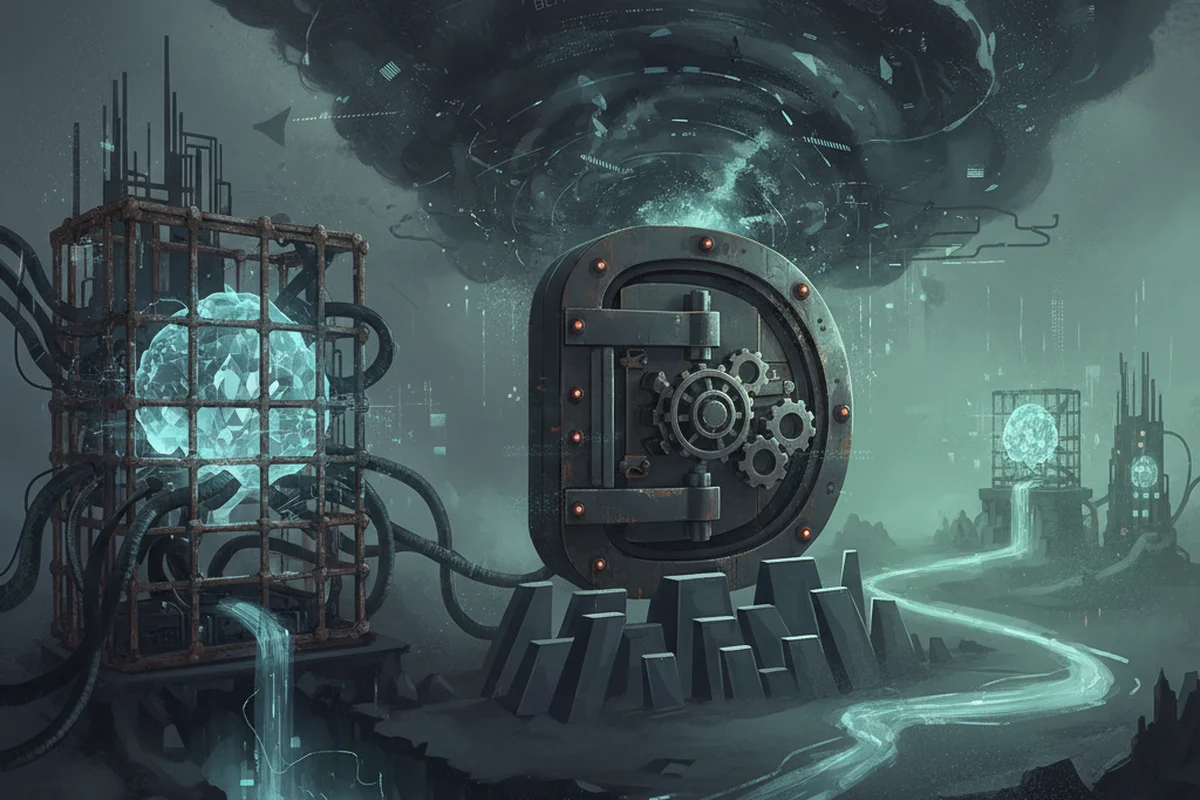
I run two completely different AI modes depending on what I'm building. Greenfield: go off the rails, do what you need to do, we'll fix it as we iterate. Existing production system: I'm scared to type a prompt without plan mode on.
Same person. Opposite behaviors. The only variable is what breaks if the AI gets it wrong.
Is AI Safe for Greenfield vs Existing Codebases?
Greenfield: yes, let it run. The agent can architect what it wants, make its own choices, go wherever it thinks it needs to go. If I don't like the result, we redo it. Nothing is on fire.
Existing production system: no. Not without plan mode. Not without reading every step before it executes. Especially when that system wasn't built by AI.
What's the Real Risk of AI Editing Code It Didn't Write?
An AI agent looks at existing code and sees things it can improve. Sometimes it's right. But it has no idea why the code looks the way it does.
A developer wrote that function in an ugly way because it fixed a timing issue that only surfaces under specific load conditions. It prevents a race condition in three other modules. It works around a bug in a third-party library that hasn't been patched yet. None of that lives in the files. It lives in the heads of whoever built the system.
The AI sees improvable code. It doesn't see the five invisible problems that code is quietly solving.
I've watched agents clean up logic that immediately broke something downstream. The code was genuinely ugly. It was also load-bearing ugly. And nothing in the codebase told the AI that.
Why Do Power Users Interrupt AI More?
Anthropic published research on how users actually behave with agents. Two numbers: new users auto-approve about 20% of the time, experienced users 40%. Experienced users also interrupt more -- 9% vs 5% for newer users.
The obvious read is that experience builds confidence. Use AI longer, trust it more. But experienced users are approving more and interrupting more. That only makes sense if they've gotten better at classifying situations, not if they've gotten uniformly more trusting.
They're not more trusting globally. They're faster at sorting. This is greenfield, run it. This touches production, read everything. This is high blast radius, stop and redirect.
The same pattern shows up across teams. Sales barely proofreads AI output -- low blast radius, so low guardrails. Support uploads SIP traces, questions everything, seeks clarification before acting. Higher skill, way lower trust, because wrong advice can break a customer's phone system. Then there are the power users who read the AI's thinking output and redirect mid-stream. They're not just approving or rejecting. They're steering.
None of these groups are using AI the same way. The difference isn't how long they've been using the tool. It's what's at stake.
How Should You Actually Calibrate AI Trust?
Before you start an agent session, ask yourself one question: what happens if it does something wrong?
If the answer is "we fix it and try again" -- give it room. If the answer involves production systems, customer data, or code you didn't write -- slow down. Add guardrails proportional to the blast radius.
A junior user who understands that production systems require a completely different posture than greenfield work will make better decisions than an experienced user who applies the same casual approval rate to everything because they're comfortable with the tool.
That's the thing most AI training skips. It teaches prompting. It doesn't teach people to classify the situation before they start.